
7 Digital Marketing Trends Every Small Business Should Watch In 2026
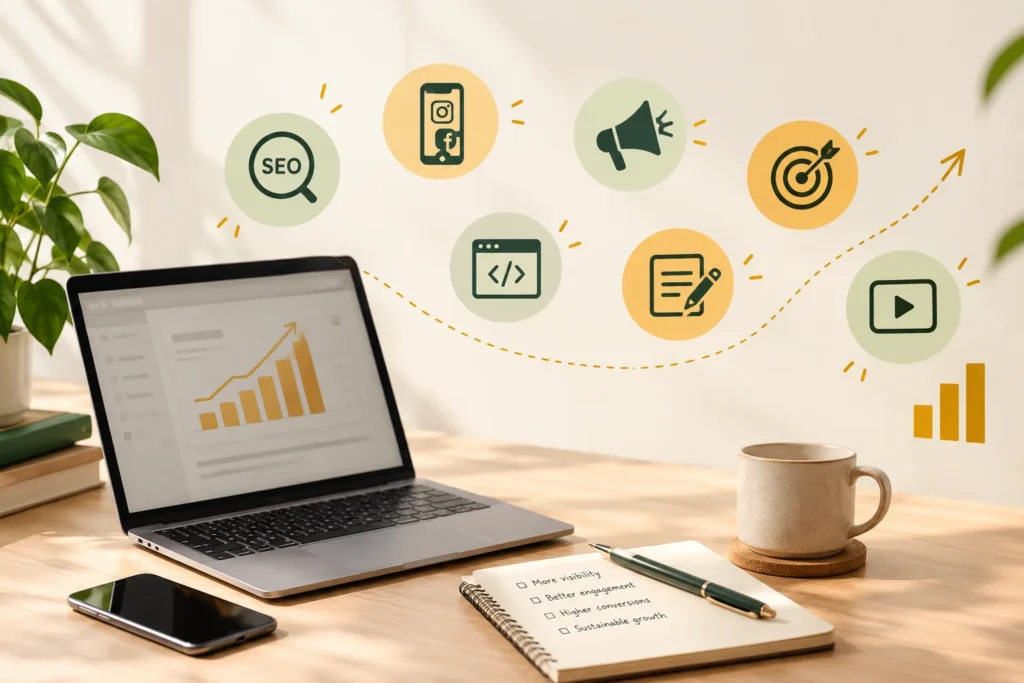
Digital marketing is evolving faster than ever. Strategies that worked a few years ago are no longer enough to capture attention, generate leads, or build lasting customer relationships.
The good news? Small businesses don’t need massive budgets to stay competitive. They simply need to understand where digital marketing is headed and adapt accordingly.
Here are seven digital marketing trends every small business should watch in 2026.
1. AI Is Becoming a Marketing Assistant, Not a Replacement
Artificial Intelligence is changing the way businesses create content, analyze data, and automate repetitive tasks. From generating content ideas to improving customer support, AI can help businesses work more efficiently.
However, customers still value authenticity. AI should support your marketing efforts – not replace your creativity, expertise, or human connection.
Takeaway: Use AI to save time, but let your brand’s voice and personality remain human.
2. Short-Form Videos Continue to Dominate
People are consuming more video content than ever before. Platforms like Instagram Reels, YouTube Shorts, and TikTok continue to shape how businesses reach new audiences.
You don’t need expensive equipment to create engaging videos. Educational tips, product demonstrations, customer stories, and behind-the-scenes content often perform better than polished advertisements.
Takeaway: Prioritize videos that educate, entertain, or solve problems.
3. Search Is Changing Beyond Google
Customers are no longer searching only on Google. Many now discover products and services through YouTube, Instagram, LinkedIn, Pinterest, AI-powered search experiences, and even voice assistants.
Your content should be optimized for multiple platforms, not just traditional search engines.
Takeaway: Think beyond Google and create content people can discover wherever they search.
4. Personal Branding Is Driving Business Growth
People trust people more than logos.
Whether you’re a freelancer, consultant, local business owner, or startup founder, sharing your expertise helps build credibility and stronger customer relationships.
Businesses with visible founders often attract more engagement because customers connect with real people behind the brand.
Takeaway: Invest in your personal brand alongside your business brand.
5. SEO Is About User Experience, Not Just Keywords
Modern SEO goes beyond inserting keywords into a webpage.
Search engines now reward websites that provide:
Helpful content
Fast loading speed
Mobile-friendly design
Clear navigation
A positive user experience
Businesses that genuinely help users are more likely to rank higher in search results.
Takeaway: Focus on creating content that answers real customer questions.
6. Quality Content Will Always Win
Publishing content just to stay active is no longer an effective strategy.
Instead, create content that:
Educates
Solves problems
Builds trust
Demonstrates expertise
One valuable blog post or video can deliver better results than dozens of generic promotional posts.
Takeaway: Create content people will want to save, share, and revisit.
7. Your Website Is Your Most Valuable Digital Asset
Social media platforms and algorithms change constantly. Your website is the one platform you truly own.
A professional website helps you:
Build trust
Generate leads
Rank on search engines
Showcase your services
Convert visitors into customers
Social media should drive people to your website, not replace it.
Takeaway: Treat your website as the foundation of your digital marketing strategy.
Digital marketing in 2026 is no longer about chasing every trend. It’s about choosing the right strategies that align with your business goals and customer needs.
By embracing AI thoughtfully, creating valuable content, strengthening your SEO, investing in personal branding, and maintaining a strong website, small businesses can compete with larger brands without overspending.
Success doesn’t come from being everywhere—it comes from consistently delivering value where your audience is looking.
The businesses that grow in 2026 won’t necessarily have the biggest marketing budgets. They’ll be the ones that build trust, adapt to change, and create meaningful experiences for their customers.
Looking for a freelance digital marketing consultant in Dubai who understands both strategy and content? Let’s build a stronger online presence for your brand with a clear, purposeful approach.